

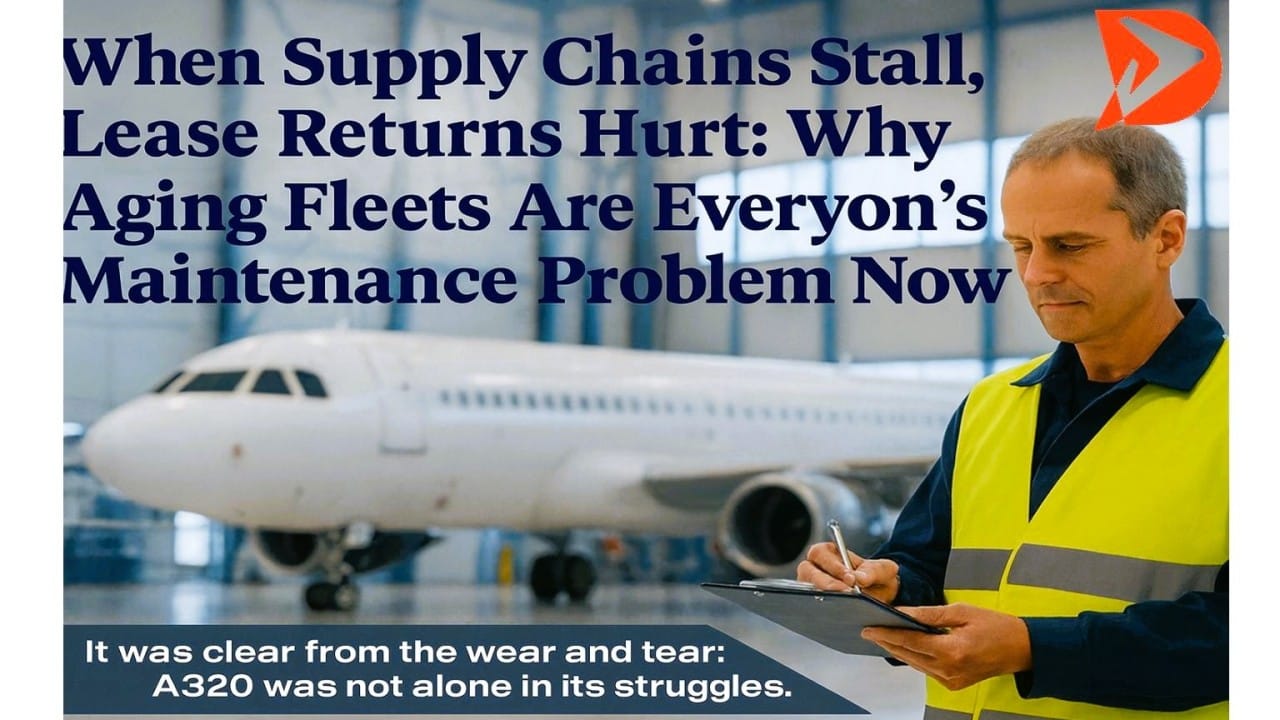
The airline had planned to retire an aircraft two summers ago. New aircraft were supposed to be in service, lease returns neatly sequenced, heavy checks spaced out. Instead, supply-chain delays pushed deliveries to the right, the aircraft kept flying, and what was meant to be a clean re-delivery turned into an overworked asset with tired interiors, deferred cabin fixes, and line maintenance teams holding it together day by day.
The supply-chain squeeze behind every late lease return.
IATA and Oliver Wyman now estimate that supply-chain disruption will add more than US $11 Billion of extra cost to airlines in 2025.
The breakdown is telling:
- US $4.2 bn in extra fuel because airlines are forced to fly older, less efficient aircraft while they wait for new deliveries.
- US $3.1 bn in additional maintenance as fleets age and heavy checks multiply.
- US $2.6 bn in extra engine leasing because shop visits are longer and slots tighter.
- US $1.4 bn in surplus inventory as airlines stockpile parts to protect themselves from unpredictable lead times.
2. Line and Base maintenance: the quiet heroes of lease return value.
Against this backdrop, line and base maintenance organisations are carrying out a disproportionate share of the risk — and the opportunity.
Line Maintenance: Keeping the aging assets dispatch — and data — ready
For older aircraft kept in service, line maintenance is doing far more than ‘Keeping them flying’
- Managing MEL usage and minimizing deferred defects that breach redelivery limits.
- Ensuring every defect, repair, and component change is correctly captured in the CAMO and technical records stack.
- Protecting structural and cosmetic condition where possible so that the final handback does not become a long list of cabin and cosmetic snags.
In a tight labour market, this also becomes a people story. Experienced line maintenance are increasingly the ones who spot lease-return issues 18 months early, not 18 days before the ferry flight.
Base Maintenance: turning last checks into value events, not cost events
For base maintenance, the final checks before re-delivery has become a strategic event.
- Check planning must integrate redelivery conditions, AD/SB status, LLP life, engine conditions and cabin specs in a single view.
- Supply-chain lead times for critical materials need to be modelled well ahead of induction.
- Where extensions are likely, maintenance programmes must be flexible enough of support both scenarios: on-time re-delivery or further operations.
With Billions of added cost, delayed deliveries, scarce engine slots, and long lead times for critical components, the very beginning of a lease-return challenge starts far upstream — well before an aircraft ever enters the hanger.
So the real question is this:
In a world of continuous disruption, are your supply-chain strategies and your line & base maintenance programs truly aligned to guarantee a smooth, on-time lease return?